The Psychology Behind Giving Flowers on Valentine’s Day
Every year, on February 14th, something strange happens to the streets of Melbourne. People who usually spend their mornings rushing to meetings or coffee shops are suddenly seen cradling bundles of wrapped stems like they’re holding something sacred. It’s a ritual that has survived centuries, industrial revolutions, and the digital age. But why? If you break it down logically, flowers are temporary. They don’t have the utility of a new gadget or the permanence of jewellery.
The answer lies deep in human psychology. Giving flowers isn’t just about the physical object; it’s an intricate dance of sensory triggers, social signaling, and evolutionary history.
The Immediate Impact on Mood
It isn’t just a “nice feeling” when someone receives a bouquet. There is actual science behind the smile. A famous study by Rutgers University explored the link between flowers and life satisfaction, finding that flowers have an immediate impact on happiness. Participants in the study reported feeling less depressed, anxious, and agitated after receiving flowers.
Humans are wired to respond to the vibrant colors and organic shapes of nature. This is often referred to as “biophilia”—our innate tendency to seek connections with nature and other forms of life. In an urban environment where we are often surrounded by concrete and glass, the sudden introduction of a textured, fragrant bouquet of lilies or tulips acts as a sensory “reset” button. It’s a bit of the wild brought indoors, and our brains react by releasing dopamine and serotonin, the chemicals responsible for making us feel good.
The Language of Symbolism
Historically, we haven’t always been great at talking about our feelings. During the Victorian era, the “language of flowers” (floriography) became a sophisticated way to communicate messages that were too scandalous or intense to say out loud. While most of us aren’t carrying around dictionaries to decode a specific arrangement today, that psychological weight remains.
When someone hands over a dozen red roses, they aren’t just giving a plant. They are utilizing a universal symbol for passion and romantic love. If they choose sunflowers, they are signaling loyalty and a bright, positive spirit. We use these botanical stand-ins to bridge the gap between what we feel and what we can actually articulate. Sometimes, a well-chosen mixed bouquet says “I appreciate everything you do” much more effectively than a text message ever could.
The Effort of the Search
In psychology, “costly signalling” suggests that a gesture’s value is tied to the effort behind it. Valentine’s Day is a prime example; anyone can grab supermarket roses at the last minute, but the foresight required to secure a curated arrangement (such as those at thanksabunchflorist.com.au/collections/valentines-day) proves a much higher level of investment in the relationship.
It’s the opposite of a last-minute gift card picked up at a petrol station. Choosing a specific scent—perhaps a fragrant orchid for someone who loves luxury, or a bunch of long-lasting carnations for someone who values endurance—proves that the giver has been paying attention. That act of selection is a psychological confirmation of the bond. It tells the recipient: “I know your taste, and I planned this for you.”
Sensory Memory and Nostalgia
The sense of smell is the only one of our five senses that is directly linked to the amygdala and hippocampus—the parts of the brain that handle emotion and memory. This is why a specific scent can instantly transport you back to a specific moment in time.
When you give flowers on Valentine’s Day, you are essentially planting a “sensory anchor.” Years later, the scent of a particular rose or the sight of a specific hydrangea can trigger the memory of that Valentine’s Day. It’s a way of making a fleeting moment last much longer in the recipient’s mind. For those looking for something even more permanent, the rise of everlasting flowers—preserved or dried arrangements—allows that physical memory to sit on a mantlepiece for years.
Why the Delivery Matters
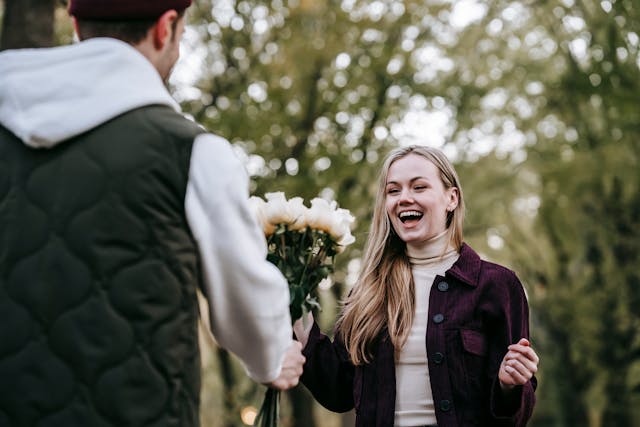
There is also a social psychology element to the “delivery” aspect of flowers. Having a bouquet arrive at a workplace or a home creates a public or semi-public acknowledgment of the relationship. While some prefer a private exchange, for many, the arrival of a professional delivery service adds a layer of prestige and “event” to the day.
For many living in Melbourne, from the leafy streets of Eltham to the bustling hubs like Essendon or Bundoora, the sight of a delivery van on February 14th is a harbinger of a good day ahead. According to social psychology research on gift-giving, the “surprise” element of a gift can significantly amplify the emotional response. A planned delivery creates an arc of anticipation and reward that a standard hand-to-hand exchange sometimes lacks.
The Evolution of the Choice
The psychology of the gift also changes based on the stage of the relationship.
- The New Romance: This is usually about the “wow” factor. Vibrant, bold choices like gerbera daisies or exotic orchids signal excitement and the “chase.”
- The Long-Term Partner: Here, the psychology shifts toward gratitude and stability. Hydrangeas, which represent heartfelt emotions, or even classic tulips, suggest a “perfect love” that has matured over time.
- The “Just Because”: Sometimes, the most psychologically impactful flowers are the ones given without the pressure of a holiday, but Valentine’s Day provides the perfect “social permission” to go all out.
It’s About Connection, Not Just Petals
At the end of the day, we aren’t just buying flowers because “that’s what you do” on Valentine’s Day. We do it because we are social creatures who crave connection. We live in a world that is increasingly digital and intangible. Most of our “gifts” are now subscriptions, downloads, or bank transfers.
Flowers are the antidote to that. They are messy, they smell, they have textures, and they eventually fade—which, ironically, is what makes them so precious. They represent the “here and now.” When you send flowers across Melbourne, whether they’re headed to Epping, Lalor, or South Morang, you’re sending a physical piece of beauty that demands to be noticed in the present moment.
If you’re interested in the broader impact of nature on our mental well-being, you can look into the concept of forest bathing or how green spaces affect urban health. It’s all part of the same psychological thread: humans need the natural world to feel whole.
Timing is Everything
Psychologically, the “stress” of a late gift can often negate the positive feelings of the gift itself. Procrastination is a mood-killer. Because Valentine’s Day is the absolute peak for the floral industry, the “early bird” approach isn’t just about logistics; it’s about peace of mind. Placing an order a week out ensures that the best blooms—the premium long-stemmed roses or the rarest lilies—are secured.
The act of giving flowers is a small bridge between two people. It’s a tradition that, despite its age, continues to work because our brains haven’t changed that much. We still want to be seen, we still want to be appreciated, and we still want to be reminded that, amidst the daily grind, there is something beautiful growing just for us.